
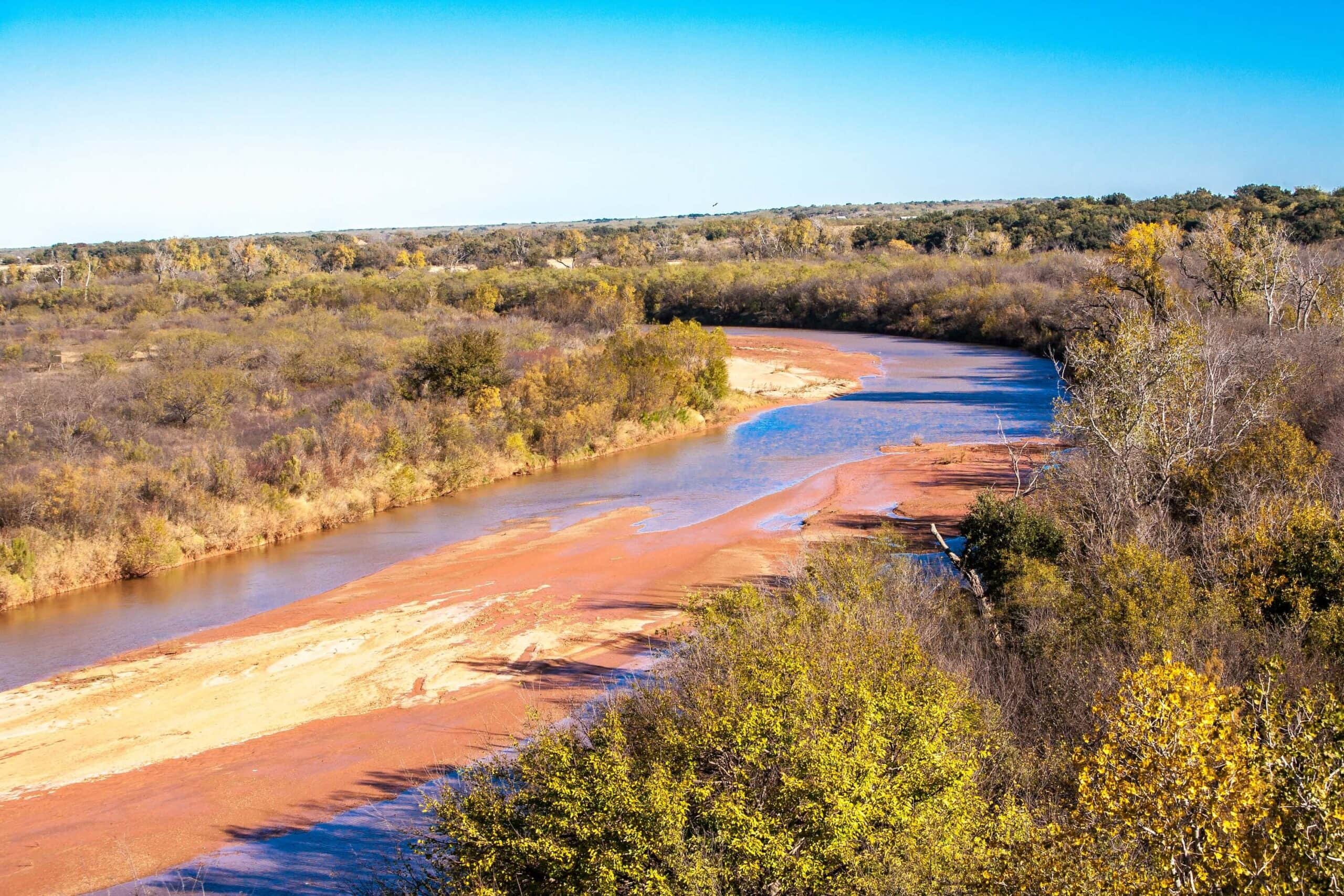
Rivers cut through Texas like arteries, moving life across the state from north to south, east to west. They carved canyons through limestone, built delta wetlands along the coast, and gave settlers water in an otherwise harsh land. Texas sits at the meeting point of four different climate zones, so rivers here take on wildly different characters depending on where they flow.
The state has more than 3,700 named streams flowing through 15 major river systems. These waterways determine where cities grow, where farms produce crops, and where recreation happens. For anyone looking at Texas riverfront properties for sale, each river brings different opportunities. At Mossy Oak Properties, we help buyers find Texas land for sale that matches their goals, from cattle operations to weekend retreats.
1. Rio Grande – The Mighty Border River
The Rio Grande stretches close to 1,900 miles from Colorado to the Gulf of Mexico. The Texas portion forms the entire southwestern border with Mexico. This river cuts through Big Bend’s canyon walls, creating some of the most dramatic desert scenery in North America. Below El Paso, it slows and spreads across floodplains that built the fertile Lower Rio Grande Valley.
- World-class rafting through 1,500-foot canyon walls in Big Bend National Park
- Fishing for catfish and Rio Grande cichlids in slower sections
- Remote ranch tracts with miles of river access and zero neighbors
- The lower valley produces citrus and vegetables on the delta soils
Big Bend National Park protects the wildest stretches. Land along the Rio Grande typically consists of remote ranch tracts with river access and views that stretch for miles without another person in sight.
2. Red River – The Northern Divide
The Red River marks the entire northern border between Texas and Oklahoma for more than 1,360 miles. Clay beds along the banks give the water its distinctive rust color during high flows. This river flows through agricultural country with fertile bottomlands that farmers have worked for generations.
- Lake Texoma spans both states, with striped bass fishing
- Catfishing runs strong in most sections
- Fertile floodplain soils support row crops and hay operations
- Hunting properties with river frontage hold whitetail deer and wild hogs
The Red River country offers farms with irrigation potential and recreational tracts. Most landowners here value river access for both agricultural water rights and outdoor activities.
3. Brazos River – River of the Southern Plains
At 1,280 miles, the Brazos is the longest river completely within Texas. It winds southeast through Waco, past Texas A&M University, and eventually empties into the Gulf. Major reservoirs like Possum Kingdom Lake and Lake Whitney interrupt the flow, creating recreation hubs.
- Possum Kingdom Lake draws boaters to its cliff-lined shores
- Bass and catfish populations support year-round fishing
- Weekend camps and hunting leases line tributary creeks
- Ranch properties include water rights for livestock operations
Many Texas recreational land for sale tracts sit along tributary creeks feeding into the Brazos. These properties work well for family recreation, and ranch properties along the main channel typically support cattle with reliable water access.
4. Colorado River – The Lifeline of Central Texas
The Colorado River flows entirely within Texas for 862 miles. It runs through Austin, where Highland Lakes dams create Lake Buchanan, Inks Lake, Lake LBJ, Lake Marble Falls, Lake Travis, and Lake Austin. Below Austin, the river continues southeast to Matagorda Bay.
- Highland Lakes chain provides year-round boating and fishing access
- Hill Country sections feature limestone banks and cypress groves
- Lake Travis and Lake Austin command premium property values
- Lower river supports pecan orchards and hay operations near the coast
Property values along the Colorado tend to run high, especially near the lakes. Hill Country riverfront lots attract buyers looking for second homes, while agricultural tracts along the lower Colorado work for production operations.
5. Trinity River – Flowing Through the Heart of Dallas–Fort Worth
The Trinity River runs 710 miles from North Texas down to Trinity Bay near Houston. It passes directly through the Dallas–Fort Worth metroplex, making it one of the most urban major rivers in the state. Below the metros, it flows through rural timber country and agricultural bottomlands.
- Urban greenway trails run for miles through Dallas and Fort Worth
- Bass, catfish, and sunfish fishing in surprisingly clean stretches
- Rural properties north of metros within commuting distance
- Land prices stay below Colorado River values with better access
Rural Trinity River properties offer accessible land within reach of major employment centers. These tracts work for small farms, horse properties, and rural retreats without the premium Hill Country pricing.
6. Sabine River – The Eastern Boundary of Texas
The Sabine River forms much of the Texas–Louisiana border for about 510 miles. It flows through pine forests and bottomland hardwoods typical of the Deep South. Toledo Bend Reservoir ranks as one of the top bass fishing lakes in the country.
- Toledo Bend produces trophy largemouth bass consistently
- Piney Woods timber tracts generate income from pine pulpwood
- Deer, hogs, and ducks provide year-round hunting opportunities
- Lower land prices than the Hill Country, with thick forest cover
East Texas Piney Woods properties appeal to buyers wanting hunting land, timber investment, or quiet recreational retreats. The thick forest cover and water access make the Sabine River country work well for wildlife management.
7. Neches River – East Texas Wilderness
The Neches River flows 416 miles southeast through the Big Thicket National Preserve before reaching the Gulf Coast. This river moves through some of the wildest, most biologically diverse land in Texas. The Big Thicket protects a mix of swamps, forests, and wetlands where eastern and western plant species meet.
- Cypress-tupelo swamps create paddling routes through old-growth forest
- Big Thicket National Preserve protects over 100,000 acres of wilderness
- Birders find species combinations that exist nowhere else in Texas
- Timberland produces pine pulpwood while supporting wildlife habitat
Neches River properties include working timberland, hunting tracts with thick cover, and riverfront camps. Conservation buyers value this area for its ecological significance and the timber production potential.
8. Guadalupe River – Hill Country’s Hidden Gem
The Guadalupe River begins near Kerrville and flows 230 miles to San Antonio Bay. Canyon Dam creates Canyon Lake, which controls flows through the most popular section near New Braunfels. This stretch sees heavy tubing traffic every summer, with thousands floating on inner tubes through spring-fed water that stays cold even in August.
- Summer tubing between Canyon Dam and New Braunfels draws massive crowds
- Winter trout fishing below Canyon Dam for stocked rainbows
- Guadalupe bass (Texas state fish) in natural river sections
- Limestone formations and oak-shaded pools on ranch properties
Guadalupe River property values reflect high demand. Riverfront lots near New Braunfels sell quickly, and ranch properties with riverfrontage attract buyers looking for Hill Country land with reliable water access.
9. Nueces River – The Wild South Texas River
The Nueces River flows 315 miles from the Edwards Plateau to Corpus Christi Bay. The upper sections near Camp Wood feature some of the clearest, most beautiful water in Texas. Limestone canyons give way to deep pools with water that shines turquoise under the sun.
- The Quince swimming hole drops 15 feet deep with crystal-clear water
- Spring-fed pools stay cold year-round even in summer heat
- Wes Cooksey Park offers camping and river access south of Camp Wood
- Remote ranch land for miles without crossing a public road
Nueces River properties typically consist of large ranch tracts used for hunting, cattle, and wildlife conservation. The clear water, dramatic scenery, and isolation appeal to buyers wanting privacy and natural beauty.
10. Pecos River – Desert Majesty and Rugged Views
The Pecos River enters Texas from New Mexico and flows 350 miles southeast through desert canyons before joining the Rio Grande northwest of Del Rio. This river cuts through limestone and sandstone, creating dramatic cliffs and isolated water sources in arid country.
- Lower Pecos canyons display thousands of years of rock art on the walls
- Mule deer and aoudad sheep hunting in rugged desert terrain
- Catfish and bass were in the water pools between rapids
- Remote ranch property with minimal development and big views
Pecos River land appeals to buyers wanting remote ranch property. These tracts work for cattle operations that can handle arid conditions, hunting operations, or simply owning dramatic desert land where water rights matter more than almost anywhere else in Texas.
Find Your Riverfront Land with Mossy Oak Properties
Texas rivers create wildly different landscapes. The Rio Grande cuts through the desert. The Neches winds through cypress swamps. The Guadalupe runs clear over limestone. Each one shapes what you can do with the land it touches.
Mossy Oak Properties works across Texas, connecting buyers to Texas waterfront properties for sale that fit how they want to use them. Hill Country riverfront, East Texas timberland along the Neches, ranch tracts with Brazos frontage. Whatever you need from your land, the river running through it matters more than most people think.