
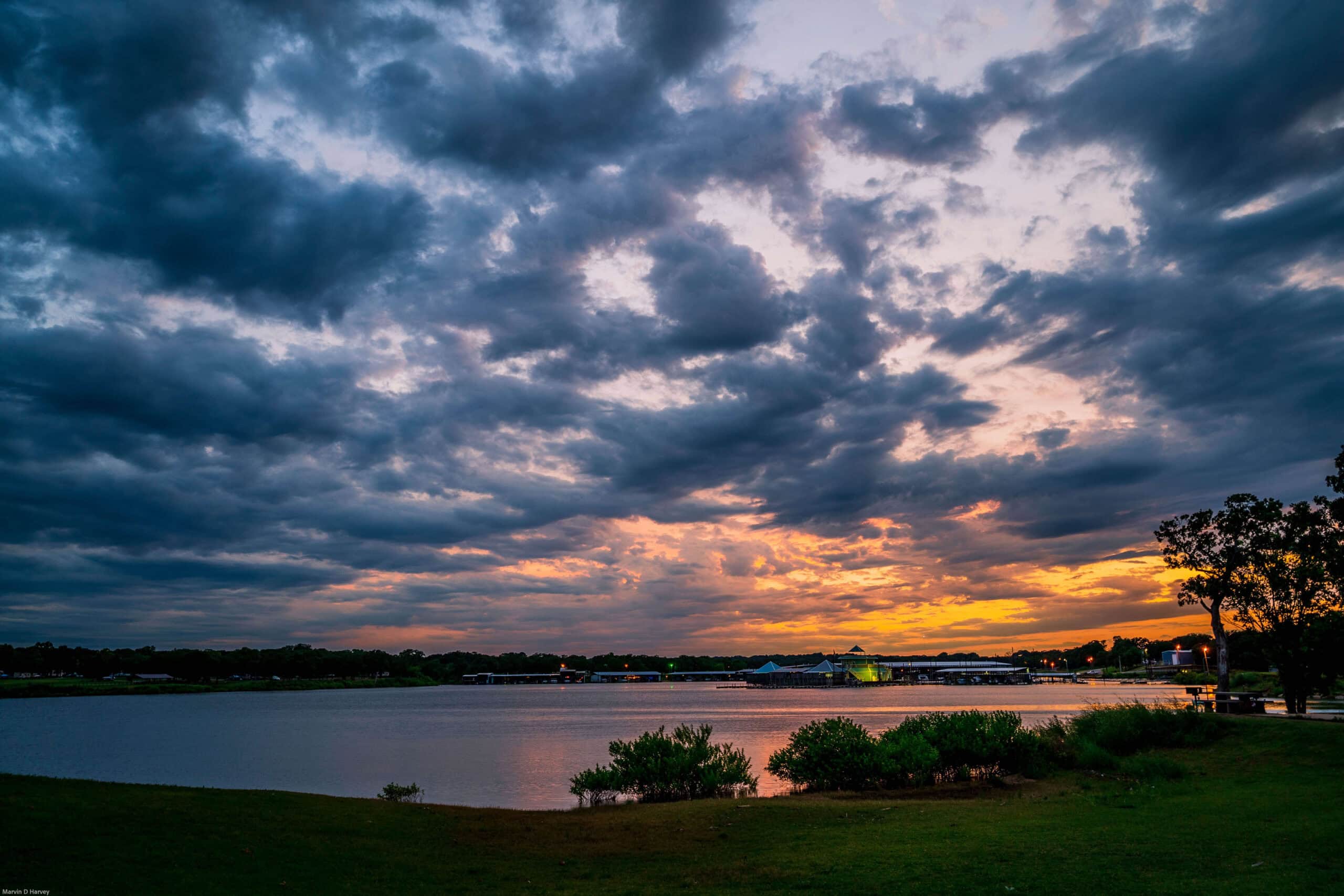
Texas sits on top of more than 7,000 lakes and reservoirs. These waters snake through pine forests in the east, carve into limestone canyons through Hill Country, and stretch across wide open plains. Some formed naturally over centuries. Others got dammed up in the mid-1900s to control flooding and generate power. What started as flood control turned into fishing destinations that now pull in anglers from across the country.
These lakes support different crowds. Serious bass fishermen chase trophies on Lake Fork. Families boat and swim at Canyon Lake. Investors buy waterfront tracts near Toledo Bend and rent them out. Mossy Oak Properties works throughout Texas, connecting buyers with land near these waters, from small recreational lots to large Texas waterfront properties for sale that include lake access and development potential. Below are some of the best lakes in Texas for fishing, boating, and lakeside living.
1. Lake Fork – Texas’s Bass Fishing Capital
- Location: Wood, Rains & Hopkins Counties in East Texas
- Size: 27,000 acres
- Record: Texas state record bass at 18.18 pounds came from here in 1992
- Numbers: More than 48% of Texas’s top 50 largemouth bass, including seven of the top 10 fish in the ShareLunker program
Lake Fork produces bass that make headlines. The 2025 Bassmaster Elite tournament here saw multiple anglers break 100 pounds over four days, with winner Tucker Smith posting numbers that nearly broke records. Water here sits about two feet below normal pool most times, keeping fish concentrated around standing timber, hydrilla beds, and creek channels. Tournament guides work this lake year-round because the bite stays consistent even when conditions change. Private timberland and rural tracts surround much of the shoreline, giving buyers access to Texas recreational land for sale with fishing rights built in.
2. Sam Rayburn Reservoir – East Texas Fishing Legend
- Location: Angelina & Jasper Counties
- Size: 114,500 acres at conservation pool, making it the largest lake entirely in Texas
- Depth: Up to 80 feet
- Tournament Count: Hosts more than 300 bass tournaments annually
- Surroundings: Angelina National Forest flanks the north and south shores
Sam Rayburn was built in 1965 for flood control but became a bass fishing factory. Bassmaster Magazine ranked it the number one bass lake in the nation in 2018. The reservoir holds standing timber, hydrilla, and flooded vegetation that bass use as cover. Spring and fall bring the best action in shallow water with crankbaits and spinnerbaits. Summer pushes fish deeper, where Texas-rigged worms and Carolina rigs work better. The lake sits deep in the Piney Woods with nearly 750 miles of shoreline, meaning plenty of space for farm and recreational tracts that back up to the water.
3. Lake Texoma – Borderline Paradise
- Location: Straddles the Texas-Oklahoma border in Grayson County
- Size: 89,000 acres
- Claim: Self-sustaining striped bass population since the 1970s, earning the title “Striper Capital of the World”
- Fish Counts: Daily bag limit of 10 striped bass with a 20-fish possession limit
Texoma draws more than two million anglers each year. The Red and Washita Rivers feed saltwater into this freshwater reservoir, creating conditions where striped bass spawn naturally without hatchery stocking. Oklahoma stocked stripers here in the 1960s, and they took hold. Now you can catch 10 to 20-pound fish regularly, with some topping 35 pounds. The lake also holds largemouth, smallmouth, and spotted bass, plus white bass, crappie, and three species of catfish. Resort communities ring the shoreline on both the Texas and Oklahoma sides, driving strong demand for waterfront real estate and lakeside development.
4. Caddo Lake – Texas’s Natural Wonder
- Location: Harrison & Marion Counties on the Texas-Louisiana border
- Size: About 26,800 acres of channels, bayous, and cypress swamp
- Unique Status: One of Texas’s few natural lakes, though a dam was added in 1971
- Recognition: Designated a Wetland of International Importance in 1993
- Features: Spanish moss, 200-year-old bald cypress trees, and 50 miles of paddle trails
Caddo Lake looks nothing like the typical Texas reservoir. Cypress trees rise from dark tannin-stained water. Spanish moss hangs from branches. Narrow bayous wind through the swamp with no clear path. The lake formed centuries ago when logjams on the Red River backed up water and flooded the area. Now it supports 71 fish species, alligators, paddlefish, and hundreds of bird species. Photographers flock here in the fall when cypress trees turn burnt orange and red. The fishing stays good year-round for bass, crappie, and catfish. Secluded tracts around the lake work for eco-cabins or nature getaways where buyers want privacy and a different type of Texas landscape.
5. Lake Travis – The Heart of Hill Country Recreation
- Location: Travis County, about 20 miles northwest of Austin along the Colorado River
- Size: 18,930 acres at conservation pool
- Depth: One of the deepest Texas lakes, reaching 210 feet in places
- Draw: Clear water, limestone cliffs, and a strong vacation rental market
Lake Travis became the playground for Austin residents and vacation renters. The water stays clear most time due to upstream lakes that filter sediment. Steep limestone cliffs line sections of the shore, creating scenic views and cliff-jumping spots. Marinas, waterfront restaurants, and boat rental operations run year-round. Real estate here commands higher prices than most Texas lakes because of proximity to Austin and consistent rental income potential. Properties range from small lakefront lots to large estates with private docks. The vacation rental market stays active with visitors coming from across Texas and beyond.
6. Lake O’ the Pines – East Texas Serenity
- Location: Marion & Upshur Counties near Jefferson and Ore City
- Size: 16,919 acres
- Reputation: Known for crappie fishing and quiet wooded coves
- Character: Less crowded than major bass destinations
Lake O’ the Pines sits in the Piney Woods, where tall pines and hardwoods shade the shoreline. The lake formed in 1958 when the Army Corps of Engineers dammed Cypress Creek. Crappie fishermen target this lake in the spring when fish move shallow to spawn. Bass fishing stays good, but draws fewer tournament crowds than Fork or Rayburn. The quieter atmosphere attracts buyers looking for private retreats, small ranches with water access, or retirement property where they can fish from their own dock without dealing with heavy boat traffic on weekends.
7. Lake Conroe – Urban Escape with Outdoor Spirit
- Location: Montgomery County, about 40 miles north of Houston
- Size: 20,118 acres
- Growth: Strong real estate market due to Houston’s proximity
- Features: Year-round boating, luxury marinas, and quick city access
Lake Conroe connects Houston residents to lake life without driving three hours. The reservoir was built in 1973, and real estate development followed quickly. Now the shoreline holds luxury homes, gated communities, golf courses, and full-service marinas. The lake stays busy year-round with recreational boating, skiing, and fishing. Bass, catfish, and crappie all inhabit these waters. Property values here reflect the convenience factor. Buyers get lakeside leisure with easy commutes to Houston jobs and amenities. The market includes everything from small lots in established communities to larger acreage with development potential.
8. Possum Kingdom Lake – Clear Waters and Cliff Views
- Location: Palo Pinto County, about 100 miles west of Fort Worth
- Size: 16,716 acres
- Signature: Blue-green water and limestone cliffs, including the famous Hell’s Gate formation
- Recreation: Strong vacation rental market and ranch property nearby
Possum Kingdom was built in 1941 on the Brazos River. The water stays clearer than most Texas lakes because limestone filters sediment. Cliffs rise directly from the water in places, creating dramatic views and cliff-diving spots. Hell’s Gate is a narrow passage between towering cliffs that boats can navigate. The scenery drives tourism and vacation rentals. Fishing stays consistent for bass, catfish, and crappie. Land around the lake ranges from small waterfront lots to working ranches with lake frontage. Buyers come for the views, the recreation, and the combination of ranch lifestyle with water access.
9. Falcon International Reservoir – South Texas Trophy Waters
- Location: Along the Rio Grande near Zapata, about 50 miles south of Laredo
- Size: 83,654 acres shared between Texas and Mexico
- Climate: Year-round warm weather supporting active bass fishing
- Advantage: Lower property costs than popular Hill Country or East Texas lakes
Falcon sits on the border where temperatures stay warm enough for fishing through winter. The lake produces trophy-sized bass regularly, with fish over 10 pounds coming in throughout the year. The warm climate also supports excellent hunting nearby for deer, dove, and quail. Property prices run lower here than in the lakes closer to major cities. Buyers can find larger tracts with both hunting and fishing access for less money. The trade-off is distance from urban areas and fewer amenities along the shore. This lake works for people who want affordable land with strong fishing and hunting potential in a single package.
10. Canyon Lake – Jewel of the Hill Country
- Location: Comal County between Austin and San Antonio
- Size: 8,230 acres
- Feature: Spring-fed water that stays cooler and clearer than many Texas lakes
- Bonus: Trout fishery below the dam on the Guadalupe River
- Setting: Rolling hills and limestone outcrops
Canyon Lake was built in 1964 on the Guadalupe River. The spring-fed water keeps temperatures cooler in summer, making it popular for swimming and water sports. The lake sits in Hill Country with views of rolling terrain and exposed limestone. Eight parks ring the shoreline with camping, boat ramps, and swimming areas. Below the dam, the Guadalupe River stays cold enough to support a stocked trout fishery. Property around Canyon Lake includes hilltop lots with lake views, waterfront homes, and small ranches. The location between San Antonio and Austin drives strong demand for vacation homes and short-term rentals.
11. Lake Whitney – Hidden Gem on the Brazos
- Location: Hill & Bosque Counties, about 60 miles south of Fort Worth
- Size: 23,560 acres
- Draw: Clear swimming waters, limestone cliffs, and a relaxed community atmosphere
- Activities: Fishing, cliff diving, houseboat rentals, and camping
Lake Whitney sits on the Brazos River, where the terrain starts transitioning from prairies to hills. The water stays clearer than upstream reservoirs, making it popular for swimming. Limestone cliffs line sections of the shore where people jump into deep water. The lake holds bass, crappie, catfish, and white bass. Houseboat rentals operate here, letting visitors spend a few days anchored in coves. Property around Whitney costs less than major tourist lakes while still offering waterfront access and recreation. Buyers find weekend properties, small waterfront lots, and larger acreage with development potential.
12. Lake Buchanan – Big Water, Big Views
- Location: Burnet & Llano Counties in the Highland Lakes Chain
- Size: 23,060 acres, the largest of the Highland Lakes
- Fishing: Known for striped bass and white bass
- Scenery: Granite outcrops and hill country vistas
Lake Buchanan formed in 1937 as the first of the Highland Lakes dams. The shoreline alternates between sandy beaches and exposed granite that glows pink at sunset. Striped bass fishing brings anglers here in spring when fish move into shallow water. White bass runs also draw crowds when fish school and chase shad. The lake sits far enough from Austin to avoid heavy weekend traffic but close enough for day trips. Wineries have opened in the area, adding to tourism. Property options include waterfront lots, hilltop acreage with lake views, and vineyard estates. Investors buy here for vacation rentals and long-term appreciation.
13. Toledo Bend Reservoir – Texas’s Eastern Giant
- Location: On the Texas-Louisiana border in Sabine, Shelby, Panola, and Newton Counties
- Size: 185,000 acres, the largest reservoir in Texas and the fifth-largest in the United States
- Shoreline: More than 1,200 miles
- Fishing: Consistently ranks among America’s top bass lakes
- Features: Standing timber, hydrilla beds, and diverse structure
Toledo Bend dwarfs other Texas lakes. The reservoir stretches 65 miles up the Sabine River, with water covering 185,000 acres at the conservation pool. Both Texas and Louisiana built this project in 1969 without federal funding. Bass fishing here rivals any lake in the country. The water holds structure, including standing timber, hydrilla, native vegetation, and creek channels. Largemouth bass dominate, but anglers also catch striped bass, white bass, crappie, and catfish. The massive size means finding uncrowded water even on busy weekends. Property opportunities abound from small waterfront lots to large recreational tracts. Prices run lower than popular Hill Country lakes while fishing quality stays high. The lake supports hunting nearby for deer and hogs, making it attractive for buyers wanting both water and land activities.
Your Texas Lake Dream Starts with Mossy Oak Properties
Texas lakes create opportunities for fishermen, families, and investors. The waters covered here represent different parts of the state, from deep East Texas forests to limestone Hill Country. Each lake has its own character, fish populations, and land markets. Buyers show up with different goals. Some want a weekend cabin on Lake Fork where they can chase bass. Others need larger tracts near Toledo Bend that combine hunting and fishing. A few target vacation rental properties near Austin on Lake Travis.
Mossy Oak Properties specializes in Texas land for sale near these lakes. The company operates across more than 30 states with offices throughout Texas. Their agents work with recreational buyers, ranchers, and investors who want waterfront access, fishing rights, or development potential. The network includes local experts who know lake markets, property values, and what sells. They connect buyers to top fishing spots, private retreats, and income-generating land. Contact Mossy Oak Properties to start looking at lake property options across Texas.