
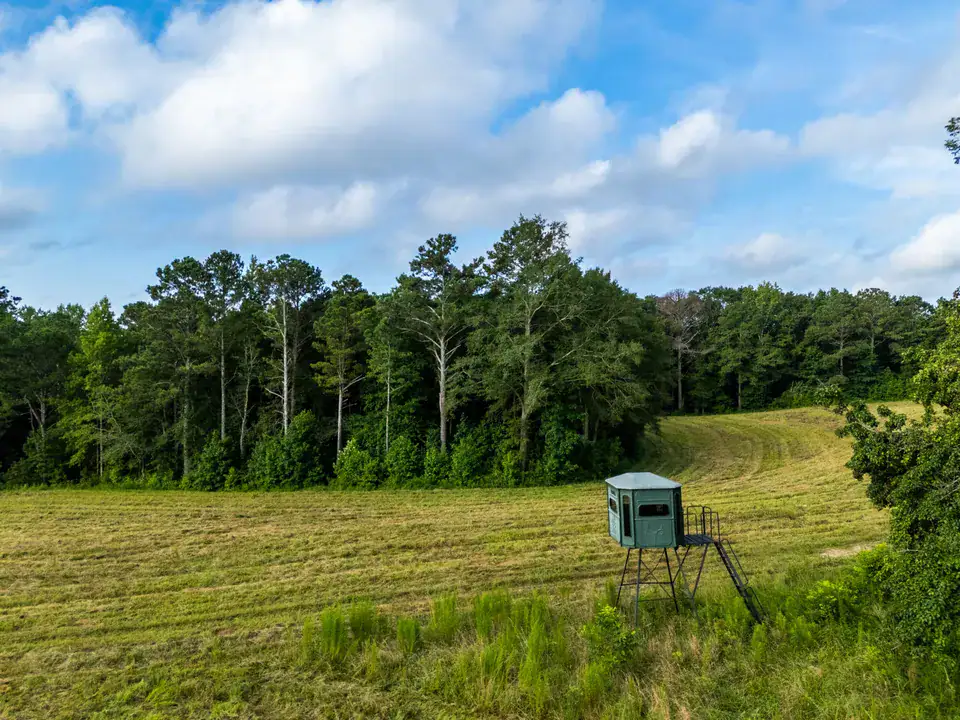
You found a tract online that looks right. It has good cover, a creek on the back line, and a price that seems fair for the acreage. However, the listing doesn’t provide information on whether the county behind that fence line produces deer, whether the land’s tax bill resets the day you close, or whether the seller’s conservation covenant becomes your covenant the moment the deed transfers. Buying Georgia hunting land for sale means answering those questions before you make an offer, not after. This guide walks through the regions, counties, seasons, and real costs, using state and federal data instead of listing-page enthusiasm.
What Georgia Hunting Land Actually Offers, Region by Region
Georgia’s range is one of its biggest advantages for a hunting land buyer, and it is also why one part of the state can look nothing like another. North Georgia’s mountains and Blue Ridge foothills hold steep, forested terrain, national forest boundaries that extend hunting access beyond a tract’s own lines, and a hardwood-heavy habitat that suits a different hunting style than the rest of the state. The Piedmont, running through the middle of Georgia, mixes ridge-and-valley hardwoods with easier terrain and closer proximity to Atlanta, which matters if you plan to hunt on weekends rather than live near the land full-time. South Georgia’s Coastal Plain is flatter, warmer for longer, and carries the state’s deepest quail heritage alongside strong deer and turkey numbers, with agricultural field edges that create natural food sources most of the year.
A few traits define land that works well across all three regions:
- Reliable cover, whether hardwood bottoms, planted pine, or a mix of both
- Water on or near the property, since creeks, ponds, and river frontage shape both wildlife movement and resale value
- Road frontage and deeded access that hold up in wet weather, not just on a dry survey day
- A layout that lets you hunt the land without pushing deer off it every time you walk in
None of these traits are unique to one region. What changes is the mix, and that mix should drive where you start looking, not just the price per acre.
Best Counties for Deer Hunting in Georgia
Georgia’s deer herd is large and well distributed, but harvest numbers by county tell a more useful story than statewide averages. The state’s Wildlife Resources Division tracks county-level deer harvest through its Game Check system, and for the 2024-25 season Floyd County led the state with roughly 4,300 deer, narrowly ahead of Hancock County’s 4,295. Hall, Washington, and Wilkes counties rounded out the top five, each above 3,900 deer.
High harvest counties are not automatically the counties with the biggest bucks. What they reliably signal is deer density and hunting pressure, both of which matter more to most buyers than a single trophy story. A county with consistently strong harvest numbers usually has the habitat, food availability, and herd health to support regular hunting use, which is a more durable value driver than one exceptional season. If you are weighing two tracts of similar size and price in different counties, the harvest data is a reasonable tiebreaker, and it is one almost no other guide to Georgia hunting land actually cites.
Turkey Season and Why It Extends Georgia’s Hunting Value
Deer get most of the attention, but turkey gives Georgia land a genuine second season that buyers often undervalue. Georgia’s 2026-2027 turkey season opens March 27, 2027, on private land and April 3, 2027, on public land, WMAs, and National Forest land, with a two-gobbler season limit and a one-bird-per-day restriction. That private-land head start matters for a landowner, since it adds several weeks of spring access ahead of the public opener. A tract that hunts well for both deer in the fall and turkey in the spring effectively doubles its usable season, a factor worth considering when comparing two similar properties.
Georgia’s Hunting Seasons at a Glance
Season timing shapes when a purchase makes practical sense, and it is worth having the current dates in one place before you start touring land. Based on the 2026-2027 season dates and bag limits published for Georgia:
- Archery deer season opens September 12, 2026, and runs through October 9, with extended archery available through January 31, 2027, in a defined set of counties
- Primitive weapons and youth-only firearms season runs October 10–16, 2026
- Firearms deer season runs October 17, 2026 through January 10, 2027, statewide
- Turkey season opens March 27, 2027 on private land and April 3, 2027 on public land, WMAs, and National Forest land, both closing May 15
- The statewide deer bag limit is 12 per hunter, no more than 10 antlerless and 2 antlered.
These dates and county-specific exceptions change each year, so confirm the current season before planning a hunt or marketing a property by season timing.
What Georgia Hunting Land Actually Costs
Price is where most buyers start, and it is also where the current crop of Georgia hunting land guides goes vague. The USDA’s 2025 farm real estate figures put Georgia’s average farm real estate value at $4,720 per acre, up 4.9 percent from $4,500 in 2024. Cropland averaged $4,520 per acre and pasture averaged $4,900 per acre in the same report.
Those figures are agricultural averages, not hunting land prices, and hunting tracts routinely price above them. A buyer is paying for habitat quality, water, access, and recreational use, not yield per acre, and in Georgia’s Coastal Plain and Piedmont especially, well-managed timber and wildlife habitat can push a tract’s price well past the raw agricultural benchmark. Treat the NASS figures as a floor for context, not a ceiling for what a good hunting tract should cost.
Georgia’s Conservation Use Valuation (CUVA): What Buyers Inherit
Georgia has a program, commonly called CUVA, that lets qualifying land be taxed at its current-use value instead of its fair market value, which can meaningfully lower the annual property tax bill on working ground. The Georgia Department of Revenue describes this as an option for bona fide agricultural property, and the underlying statute’s own definition of qualifying conservation-use property extends the same treatment to timberland and certain environmentally sensitive land. In exchange, the landowner agrees to keep the property in a qualifying use for ten years. The Georgia Department of Revenue’s conservation use assessment guidance is direct about what happens if that commitment breaks: owners who breach the covenant must pay back to the taxing authorities twice the savings they received over the life of the covenant up to the point of the breach.
That penalty matters directly to a buyer. If the tract you are considering is already enrolled in CUVA, you take on that covenant when you close, along with the remaining years on its term and the breach exposure that comes with it. Before you buy enrolled land, confirm exactly how many years remain on the agreement and whether your intended use for the property still qualifies. A tract that looks like a bargain because of its low current tax bill can become a costly mistake if your plans do not fit the covenant you inherited.
Timber as a Value Driver on Georgia Hunting Tracts
Timber is not a side note in Georgia land value, it is close to the main story. USDA Forest Service inventory data, summarized in a peer-reviewed University of Georgia forestry study, puts Georgia at about 24.8 million acres of forest land, roughly two-thirds of the state, with around 90 percent of it privately owned. Most of that private ground is working timberland, which is a big part of why planted pine shows up on so many hunting tracts here.
For a hunting land owner, planted pine on a tract is as much a working asset as a wildlife feature. That dual role, habitat and long-term timber value in the same acreage, is a large part of why timbered hunting tracts hold value differently than cleared agricultural ground. If timber is a significant part of what you are buying, why investing in timberland is smart goes deeper into how that value builds over a holding period.
What to Check Before You Buy Georgia Hunting Land
A strong listing photo will not tell you whether a tract will work the way you intend to use it. Before making an offer, walk through these:
- Water and access. Confirm creek, pond, or river frontage in person, and check whether the road frontage and interior access hold up after rain, not just on a clear day.
- Existing covenants. Ask directly whether the property is enrolled in the Conservation Use Value Assessment (CUVA) or the Forest Land Protection Act, and get the remaining covenant term in writing before closing.
- Timber condition. If pine is a meaningful part of the tract’s value, request a recent cruise or, at minimum, a clear stand-age estimate rather than relying on the seller’s description.
- Boundary and survey status. Confirm a current survey exists or budget for one, since boundary disputes are far more expensive to resolve after closing than before.
- Neighboring land use. Heavy hunting pressure or major land-use changes next door can shift wildlife movement on your tract, no matter how well you manage it.
None of these steps take the place of walking the property yourself, but they narrow the list of tracts worth the drive.
Working With a Local Land Specialist
Georgia’s size and regional variation are exactly why local knowledge matters more than a national listing search. Mossy Oak Properties operates as a national network of independently owned and operated land brokerage franchises, with roughly 600 land specialists across 30-plus states, most of whom are landowners and outdoorspeople themselves rather than generalist agents. That local grounding is what turns a listing description into an honest read on whether a tract fits what you are actually trying to buy. Browse current Georgia hunting land listings, or connect directly with a Georgia land specialist who knows the counties you are targeting.
Frequently Asked Questions
How much does hunting land cost per acre in Georgia?
Georgia’s farm real estate averaged $4,720 per acre in 2025, according to the USDA National Agricultural Statistics Service (NASS), with cropland at $4,520 and pasture at $4,900. Hunting-specific tracts typically price above these agricultural benchmarks because buyers are paying for habitat, water, and access rather than yield.
Which counties have the best deer hunting in Georgia?
Based on the most recent Georgia DNR harvest data, collected by county through the state Game Check system, Floyd, Hancock, Hall, Washington, and Wilkes counties posted the state’s highest total deer harvests in the 2024-25 season, signaling strong deer density and consistent hunting pressure across those areas.
Does Georgia tax hunting land differently than other property?
Yes, if it qualifies. Georgia’s conservation use program, commonly called CUVA, lets bona fide agricultural property, and under the statute’s own definition, qualifying timberland and certain environmentally sensitive land, be assessed at current-use value rather than fair market value, in exchange for a 10-year covenant. The Georgia Department of Revenue notes that breaching the covenant requires paying back twice the tax savings received up to the point of the breach, under O.C.G.A. § 48-5-7.4.
When does turkey season open in Georgia?
Georgia’s 2026-2027 turkey season opens March 27, 2027 on private land and April 3, 2027 on public land, WMAs, and National Forest land, both running through May 15, with a two-gobbler season limit.
What should I check before buying Georgia hunting land?
Confirm water and access hold up in wet weather, check for any existing CUVA or Forest Land Protection Act covenant and its remaining term, request a recent timber cruise if pine is significant to the tract’s value, and verify current survey and boundary status before you close.
If you are ready to look at specific tracts instead of averages, our agents know these counties on the ground, not just on a map. Browse what’s currently listed, or reach out to a Georgia land specialist who can walk a property with you before you decide.
Sources
- 2026-2027 Georgia Hunting Regulations, “Big Game Seasons, Dates & Limits”
- Georgia DNR Game Check deer harvest data, compiled by Georgia A-Field, with additional context from the NDA’s 2025/2026 Deer Report
- USDA National Agricultural Statistics Service, Land Values 2025 Summary
- Georgia Department of Revenue, Property Tax Valuation
- Georgia Department of Revenue, Conservation Use Assessment Information
- O.C.G.A. § 48-5-7.4 (via Justia)
- Godar Chhetri et al., “Forest Management Practices and Costs for Family Forest Landowners in Georgia, USA,” Forests (MDPI), 2022