
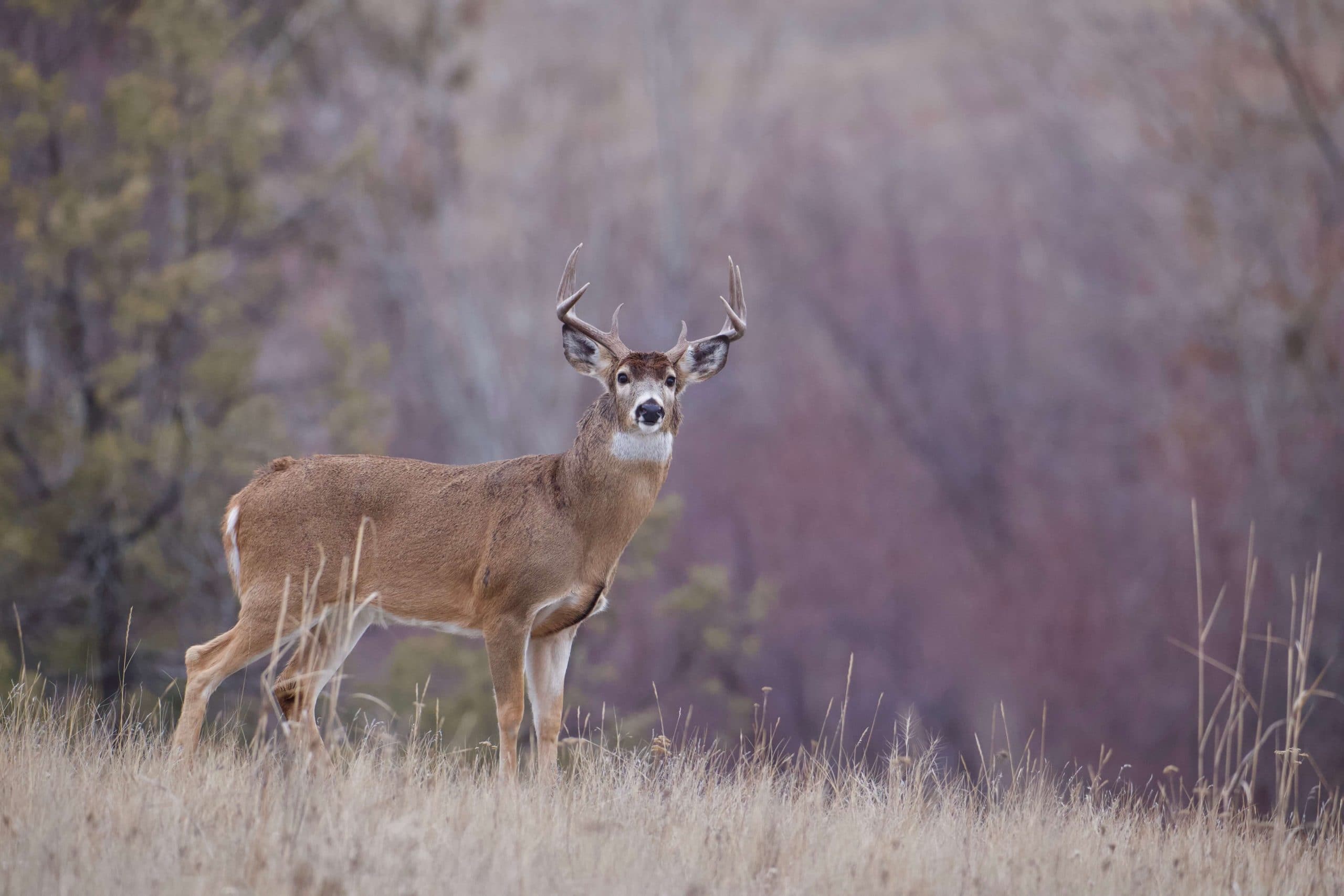
Two tracts can command the same price yet yield vastly different hunting experiences. A hundred acres of Harlan County’s ridge and hollow holds elk, black bear, and dense hardwood cover. That kind of terrain takes a full season to master. In contrast, a hundred acres of river bottom near Land Between the Lakes yields whitetail and waterfowl on flat ground, easily hunted from a truck. Buying hunting land in Kentucky starts with knowing which market you are in. The state runs three distinct regions under one name.
This guide navigates each region, breaking down current deer and elk numbers and the due diligence that catches most first-time Kentucky buyers off guard. That includes severed mineral rights in the coalfields and what a timber stand is actually worth. If you are set on hunting in Kentucky, the next question is where. This guide answers that.
Why Buying Hunting Land in Kentucky Makes Sense
Kentucky hunters just closed one of the best deer seasons on record, with 145,433 deer harvested during the 2025-26 season, the fifth-highest total in history and 3,000 above the 10-year average, according to the Kentucky Department of Fish and Wildlife Resources. That kind of harvest does not happen on marginal ground. It happens because Kentucky’s deer herd is large, well distributed, and hunted across a 136-day season. That season gives a landowner archery, muzzleloader, and modern gun opportunities on the same property.
Turkey hunting rounds out the picture. Kentucky holds a healthy spring gobbler season across nearly every county, and a tract with mature hardwoods and open field edges typically supports both deer and turkey without extra management. For a buyer, that often means one property covers two seasons instead of one.
Elk add something almost no other eastern state can offer. Kentucky’s elk restoration zone covers about 4.1 million acres across 16 southeastern counties, and hunters there pursue an animal you will not find on private land anywhere else east of the Mississippi River.
Price is another draw, with Kentucky bordering seven states and sitting within a day’s drive of most of the eastern half of the country. It still carries land values below several of its neighbors. Real game numbers combined with relative affordability explain why hunters who priced land in Tennessee or Ohio and got sticker shock often end up looking at Kentucky instead.
None of this means every acre in the state hunts the same way or carries the same risk. The three regions below explain why.
Kentucky’s Three Hunting Land Regions
Kentucky splits into three markets that a hunting land buyer should treat separately: the mountains and hollows of the east, the river bottoms of the west, and the lake country of the south-central counties in between. Each one rewards a different kind of hunter and carries a different set of questions to ask before you buy.
Eastern Kentucky, Appalachian Ridge and Hollow Country
Eastern Kentucky is defined by the Daniel Boone National Forest, which manages more than 708,000 acres of National Forest System land within a 2.1 million-acre proclamation boundary, spread across 21 counties, according to the U.S. Forest Service. A private tract bordering or adjacent to the forest inherits its scale. Deer, turkey, and an expanding black bear population all move through that terrain. Hunting tracts here are often timber tracts, with steep hardwood cover holding game and merchantable oak and poplar.
This is also the only place in Kentucky where you can hunt elk on your own ground. The 16-county elk restoration zone covers roughly 4.1 million acres, according to the Kentucky Department of Fish and Wildlife Resources. Owning land inside that zone puts elk on your property, but it does not put a tag in your pocket. Elk permits are drawn separately, and selection is necessary.
The trade-off for that terrain and that wildlife is a due diligence step almost nobody outside Kentucky thinks to ask about: mineral rights. Coal companies bought underground rights across much of eastern Kentucky generations ago, often separately from the surface. A tract can look like a straightforward timber and hunting purchase but still carry a severed mineral estate inherited at closing. More on that below.
Western Kentucky, River Bottoms and Waterfowl Country
Western Kentucky trades ridgeline for river bottom. The Ohio, Cumberland, and Tennessee Rivers cut through this part of the state. The farmland and timber along them hold whitetail deer alongside some of the strongest duck and goose hunting in the region. Land Between the Lakes anchors the area from the Kentucky side, a peninsula of more than 170,000 acres of forest, wetland, and open land between Kentucky Lake and Lake Barkley, managed by the U.S. Forest Service.
A tract near the corridor benefits from public land adjacency, like an eastern Kentucky tract benefits from national forest proximity. However, it also means more hunting pressure on opening weekends and more competition for the same access points. A buyer here should weigh road frontage and boundary access as heavily as acreage.
Western Kentucky ground tends to run flatter and more open than the east, making it easier to farm alongside hunting. A tract with tillable acres in row crop can throw off income while holding deer in the timbered draws around it. This combination is harder to find in the mountains. Waterfowl hunters also gravitate here, since flooded timber and backwater sloughs along the rivers hold ducks through the winter.
South-Central Kentucky, Lake Country and Mixed-Use Ground
South-central Kentucky sits between the other two regions in almost every sense: less rugged than the east, less flat than the west, and priced accordingly. Lake Cumberland and Dale Hollow anchor the area, with towns like Munfordville, Glasgow, and Columbia serving as local hubs. The ground around these lakes mixes hardwood ridges, pasture, and river and creek frontage, suiting hunters who also want a farm, a cabin site, or both.
This is the part of Kentucky where our own agents have the longest track record. Mossy Oak Properties Hart Realty, based in Munfordville, has worked South Central Kentucky land for decades and is part of the Mossy Oak Properties network. Our agents see the same pattern every season. Buyers come in looking for a hunting tract but end up weighing timber value, pond and creek access, and build-site potential on the same piece of ground. In this part of the state, things usually come together, not separately.
If you are deciding between the three regions, south-central Kentucky is often the easiest entry point. Prices run below the Bluegrass core, the terrain is forgiving enough to walk and hunt without technical gear, and the region holds solid whitetail and turkey numbers without the drawn-permit complexity of the elk zone.
What Kentucky’s Deer and Elk Numbers Mean for a Buyer
Kentucky’s most recent deer season backs up the reputation. Hunters took 145,433 deer statewide, the second-highest total of the past five seasons, trailing only the 149,868 deer taken in 2024-25. That 2024-25 total was second only to the 155,730 taken in 2015, which remains the state record. The regional harvest breakdown shows the Bluegrass wildlife region led all regions with 40,816 deer, about 28 percent of the total harvest. The Green River region followed closely at 39,714, then Southeast at 26,878, Purchase at 20,040, and Northeast at 17,985. This regional spread matters to a buyer. It confirms deer numbers are strong across every part of the state, so a tract in any of the three regions above is buying into a genuinely productive herd backed by real harvest data.
Elk are a different kind of asset. The department’s most recently published elk report puts the population at over 10,000 animals across the 4.1 million-acre zone, based on two separate population models. This is a modeled estimate rather than a census. Biologists revise it as new data comes in, so treat it as a strong directional figure rather than an exact count. Drawing a tag is long odds, with roughly 1-in-159 odds for a resident bull applicant and far longer odds for nonresidents, so most buyers plan on landowner access or a lease rather than counting on a drawn permit.
What these numbers mean in practice is that hunting pressure and land value tend to track each other closely in Kentucky. A county that consistently posts strong harvest totals also tends to hold its land value better. Demand from hunters looking to buy follows demand from hunters looking to hunt. If you are comparing two tracts at a similar price, pull the harvest data for that county before you decide.
Due Diligence Before You Buy Kentucky Hunting Land
Kentucky rewards buyers who do their homework before closing, not after. Four questions come up more than any others once you move past the where and into whether a specific tract is a good buy.
Mineral Rights and Severed Estates in the Coalfields
In much of eastern Kentucky, the mineral estate and the surface estate are not owned by the same party. Coal companies acquired underground rights across large stretches of the coalfield counties through broad-form deeds, many of them generations ago. Those severed estates can still be attached to a tract that looks, on the surface, like an ordinary hunting or timber purchase. This pattern is well documented across eastern Kentucky real estate. The practical takeaway for a buyer is clear: run a full title search before closing on anything in the eastern coalfield counties. Confirm in writing whether the mineral rights convey with the property or stay with a prior owner. Eastern Kentucky is still worth buying into. The point is to ask the mineral-rights question before signing.
Timber as a Second Asset
On many Kentucky hunting tracts, especially in the east, standing timber is worth asking about separately from the land itself. A mature stand of white oak or poplar can add significant value beyond a property’s recreational and hunting appeal. You can also manage it for thinning income over time, rather than leaving it untouched. Before buying, ask for a recent timber cruise or at least a stand-age estimate, just as you would ask about a well or a septic system on a residential purchase.
If timber is part of the purchase price, verify it. Our timberland listings show what that combination looks like when priced and marketed correctly.
Public Land Proximity and Access
Proximity to public land has its trade-offs. A tract bordering the Daniel Boone National Forest, Land Between the Lakes, or a state wildlife management area benefits from a larger contiguous block of habitat. This generally means more deer and more consistent movement patterns onto private ground. However, it also means more hunters in the area during opening weekends of archery and gun season, since public access draws pressure. Before buying near a public boundary, walk the property line to confirm where public land ends and yours begins. Factor hunting pressure from adjacent public ground into your hunting plan.
Current Price Trends
Kentucky’s farm real estate value averaged $5,600 an acre in 2026, up from $5,480 in 2025, according to the U.S. Department of Agriculture’s land values summary. The same report shows cropland averaging $6,630 an acre and pasture averaging $4,050 an acre. That is a statewide average across all farm real estate, not a hunting-land figure specifically. Prices vary widely by region: eastern mountain acreage typically prices below the average, while pasture and cropland near the Bluegrass core price above it. Use the statewide number as a benchmark, not a specific price to expect. Always weigh a listing against comparable sales in the same county, not the state average.
Working With a Kentucky Land Specialist
Kentucky’s land market rewards local knowledge more than most, because the difference between a good tract and an overpriced one often comes down to details a satellite map will not show you. This includes whether mineral rights convey, how a county’s deer harvest has trended over the past few seasons, or whether that timber stand has already been cut once. Mossy Oak Properties works with over 600 land specialists across more than 30 states. In Kentucky, our network includes agents like the team at Mossy Oak Properties Hart Realty, who have worked this exact ground for decades. Each Mossy Oak Properties office is independently owned and operated, so the agent helping you is someone who actually works the counties you are looking at, not a call center reading listings off a screen. That local knowledge shows up in the small details of an offer, from which creeks actually hold water year-round to which county road departments plow first after a snow.
Whether you already know which of Kentucky’s three regions you want, or you are still weighing the mountains against the river bottoms against the lake country in between, a local agent can walk a tract with you and tell you things the listing photos cannot. Browse hunting land currently on the market, or look across every listing type on our Kentucky land for sale page to see what is available right now.
Sources
- Kentucky Department of Fish and Wildlife Resources, “Kentucky’s 2025-26 deer harvest was fifth highest on record”
- Kentucky Department of Fish and Wildlife Resources, 2025-26 Deer Harvest Summary
- Kentucky Department of Fish and Wildlife Resources, Elk Hunting Regulations
- Kentucky Department of Fish and Wildlife Resources, Kentucky Elk Report 2025 (2025-26 season)
- Kentucky Department of Fish and Wildlife Resources, Public Lands Hunting
- U.S. Forest Service, Daniel Boone National Forest
- Land Between the Lakes National Recreation Area, About LBL
- U.S. Department of Agriculture, National Agricultural Statistics Service, Land Values 2026 Summary
Ready to Find Your Ground in Kentucky
Kentucky is large enough, and different enough county to county, that buying hunting land here is really three decisions in one. Decide which region fits how you hunt, run the due diligence the ground calls for, and price every tract against recent county sales rather than a statewide average. When you are ready to see what is actually on the market, a Mossy Oak Properties agent who works these counties can walk a tract with you before you make an offer and point out what the listing photos will not. Start with the Kentucky hunting land for sale our network has listed right now, and go from there.