
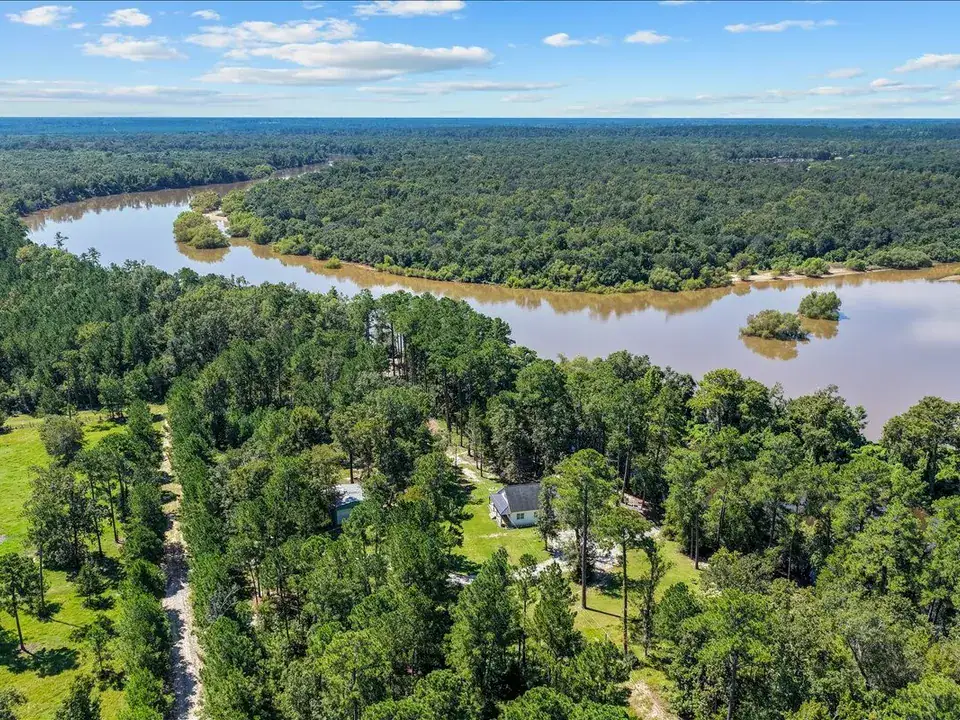
Two neighboring tracts in the same county, with similar acreage and use, can have vastly different property tax bills. The difference usually comes down to one thing: whether the land is enrolled in Georgia’s Conservation Use Valuation Assessment, known statewide as CUVA. This guide explains how CUVA works, who qualifies, what a 2026 ballot measure could change, and what it costs a landowner to walk away from the covenant early.
What CUVA Is and Why Georgia Created It
CUVA is a Georgia property tax program that taxes qualifying farmland, timberland, and environmentally sensitive land based on its current use value, not its fair market value. Under the program, real property devoted to bona fide conservation uses is assessed at 40% of its current use value. Georgia property is otherwise assessed at 40% of fair market value, unless otherwise specified by law under O.C.G.A. § 48-5-7, and CUVA is one of the ways state law specifies otherwise.
The tax break comes from applying the 40% ratio to current use value instead of fair market value. Current use value is often much lower than what a developer would pay, so the bill drops.
Georgia voters approved the constitutional groundwork for this program in 1990. The following year, the Georgia General Assembly enacted the current statute, which took effect for the 1992 tax year.
The purpose was straightforward. Farmers and timber owners near growing metro areas were being taxed on what a subdivision developer would pay for their land. CUVA lets them pay instead on what the land earns in agricultural or forestry use. It ties the tax bill to the land’s working value, so nearby development doesn’t force a farm or timber tract into a sale it wasn’t ready for.
In exchange, the landowner signs a 10-year covenant agreeing to keep the property in a qualifying use. If the landowner breaks that covenant early, the tax savings come due, with a penalty attached. The next several sections cover exactly what that involves.
Who Actually Qualifies for CUVA (and a Common Mistake to Avoid)
Qualifying land generally falls into one of three categories. The first is land used for agricultural production or timber. The second is environmentally sensitive land certified by the Department of Natural Resources. The third is land maintained as wildlife habitat under specific conditions. Ownership eligibility is narrower than many landowners expect.
To qualify, property must be owned by one of the following:
- One or more individual citizens or naturalized citizens
- An estate or trust whose beneficiaries are individual citizens
- A family-owned farm entity whose owners are all related within the fourth degree of civil reckoning, and which earns at least 80 percent of its income from conservation-related uses
- A qualifying nonprofit organization or a bona fide recreational club
Under current law, a single owner can enroll up to 2,000 acres statewide. That cap is the subject of the ballot measure covered in the next section.
Here is where several sources circulating online get it wrong. A number of county tax-assessor documents and land-tax blogs describe a 10-acre minimum for CUVA eligibility. Georgia’s current statute never lists an acreage minimum among CUVA’s general eligibility requirements. It sets only an upper limit of 2,000 acres.
The acreage-based rule that does exist is a documentation threshold, not a cutoff. A tract under 10 acres has to provide additional documentation of bona fide conservation use. That means a filed Schedule F, proof of qualifying expenses, or evidence of income from the use, unless the owner already has that paperwork on file. A tract of 10 acres or more faces no extra documentation requirement. A separate, narrower 10-acre minimum applies only where wildlife habitat is the specific qualifying use, not to CUVA eligibility in general.
Several Georgia county tax offices, including Habersham County, attribute this documentation-only structure to a 2012 change under House Bill 916, effective May 1, 2012. The current codified statute itself doesn’t narrate that history in its operative sections. If you’ve been told your parcel is too small to qualify, check the actual statute or your county board of tax assessors before you assume you’re out of the running.
The 2026 Ballot Measure That Could Double the Acreage Cap
Georgia voters will decide a CUVA change on November 3, 2026. The legislature passed the underlying law, House Bill 90, raising the maximum acreage a single owner can enroll in CUVA from 2,000 to 4,000 acres. This change takes effect if voters ratify a corresponding constitutional amendment at the November 2026 statewide general election. If they do, the higher cap begins January 1, 2027. If not, the enabling legislation is automatically repealed.
For landowners already near the current 2,000-acre ceiling, this is worth tracking closely over the next year. That is especially true for family farm entities that allocate acreage across multiple members. If ratified, it would be the first increase to the CUVA acreage cap since the program began.
How the Current-Use-Value Assessment Actually Gets Calculated
CUVA value isn’t a flat discount off market value. The Georgia Department of Revenue publishes an annual table of current use land values, broken out by soil productivity and land type. County tax assessors apply that table to the specific soil types on your tract. Each tract is graded by soil productivity, from the most productive soils down to the least. During a covenant, the current use value cannot rise or fall by more than 3 percent from one year to the next.
The Department of Revenue updated these values for 2026. The amended regulation sets new per-acre figures across the state’s nine Conservation Use Valuation Areas. That update hasn’t yet reached the Department’s general “Conservation Use Land Values” landing page, which still lists 2024 as its posted download. So if you look for the table yourself, the current figures are in the regulation, not on that page. Confirm the exact number for your parcel with your county board of tax assessors. It depends on your specific valuation area and soil productivity.
What It Costs to Break a CUVA Covenant
The covenant runs for 10 years from January 1 of the year it takes effect. Walk away early without qualifying for an exception, and the standard penalty is steep. It is twice the difference between what you paid under CUVA and what full market value would have cost, for every completed or partial year of the covenant.
That doubled amount is the penalty itself, not the penalty plus built-in interest. Interest enters the picture only if the bill goes unpaid. Once any appeal of the breach determination is resolved, you have 60 days to pay in full. Only after that window closes does the balance start accruing interest as a past-due bill. The penalty applies to the entire tract, not just the portion where the qualifying use changed.
That said, the statute carves out real exceptions that much online coverage skips entirely.
A few of these exceptions are worth spelling out. If the covenant is breached solely because of eminent domain, a sale to a condemning authority, or the death of an owner, no penalty applies at all. A breach caused by foreclosure or a medically demonstrable illness triggers only the tax difference plus interest from the date of breach, not the doubled penalty.
There is also relief late in a renewal covenant. It applies in years six through ten, and only to a specific set of people. The person breaching has to be the original covenant holder, or a close relative within the fourth degree of civil reckoning who received the property. For them, the penalty drops to the recaptured tax difference plus interest from the date of breach, with no doubling. This relief doesn’t extend to an unrelated buyer who takes over the property mid-covenant. That is worth keeping in mind for the next section.
Buying or Selling Land Under a CUVA Covenant
This is where CUVA becomes a land-transaction issue, not just a tax question, and it’s the part general tax guides tend to skip. A CUVA covenant runs with the land, not the person who signed it. When you buy a tract mid-covenant, you can continue the existing agreement for the remainder of its term without triggering a breach. You do have to file to continue it, and that filing has its own deadline the year after the ownership change.
Approved CUVA applications are recorded in the real property records through the Clerk of Superior Court. That means a standard title search should surface an existing covenant before closing. This is why it belongs on your due-diligence list, not on next year’s tax bill as a surprise.
Before You Buy Land Under a CUVA Covenant
- Confirm the covenant’s remaining term
- Review the recorded application at the Clerk of Superior Court
- Decide whether to continue the covenant or let it lapse
- Understand any homestead acreage carve-out
- File the continuation paperwork on time
If you’re selling covenant land rather than buying it, the same mechanics apply in reverse. A buyer who won’t continue the covenant creates a breach, and the statute treats that breach as occurring at the point of transfer. So it’s worth having that conversation with your buyer, and your Mossy Oak Properties agent, well before closing.
CUVA vs. the Forest Land Protection Act: Which Fits Your Timberland
For larger timber operations, Georgia offers a second program worth comparing against CUVA: the Forest Land Protection Act of 2008, or FLPA. The two overlap in purpose but differ in scale and structure.
FLPA requires forest land totaling at least 200 acres in aggregate, with a 100-acre minimum in any single county. That holds whether the land is owned by an individual, by several individuals, or by an entity registered to do business in Georgia. Like CUVA, it runs on a 10-year covenant.
The covenant length is worth a note. At least one widely shared land-tax blog describes FLPA as a 15-year program. The Department of Revenue’s own program page confirms it is 10 years, the same as CUVA.
FLPA differs from CUVA in one other way that matters. It excludes the entire residence value on the property, not just a fixed lot size. Property already enrolled in CUVA or an agricultural preferential assessment can convert to FLPA one time without penalty. That can matter if your timber holding has grown past what makes sense under a 2,000-acre CUVA cap.
How to Apply for CUVA
Applying for CUVA runs on a fixed annual calendar, and missing the window means waiting until the following tax year.
- Confirm your qualifying use and ownership type before filing, using the categories covered earlier.
- File your application with your county board of tax assessors on or before the last day for filing ad valorem tax returns in your county, typically April 1.
- Sign the covenant agreement included with the application. This is the binding 10-year commitment, not a formality.
- Track your renewal window. File a renewal covenant in year 9 to continue for another 10 years without a lapse.
- Watch for your expiration notice. County boards of tax assessors must mail notice at least 60 days before a covenant expires. A missed renewal shouldn’t catch you off guard, as long as your mailing address is current with the county.
Sources
This guide draws on the following primary sources. Figures and program details are current as of publication and subject to change with future legislative or administrative action.
- Georgia Department of Revenue, Conservation Use Land Values
- Georgia Department of Revenue, Georgia Forest Land Protection Act
- Georgia Department of Revenue, Property Tax Valuation
- Georgia Department of Revenue, 2025 Summary of Enacted Legislation
- Georgia Department of Revenue, LGSD 2026-001, Amended Rules 560-11-6 and 560-11-11
- Justia, Georgia Code § 48-5-7.4
- Habersham County, Georgia, Conservation Use Property
If you’re weighing whether CUVA, FLPA, or neither fits your Georgia property, the right answer usually depends on your situation. It looks different for someone holding land long term, someone buying into an existing covenant, and someone getting ready to sell. Our agents work these questions with landowners across the state every season, and a conversation before you file, buy, or list is worth more than a generic calculator. Browse Georgia land for sale or connect with a Mossy Oak Properties agent in Georgia to discuss what CUVA means for your specific tract.