
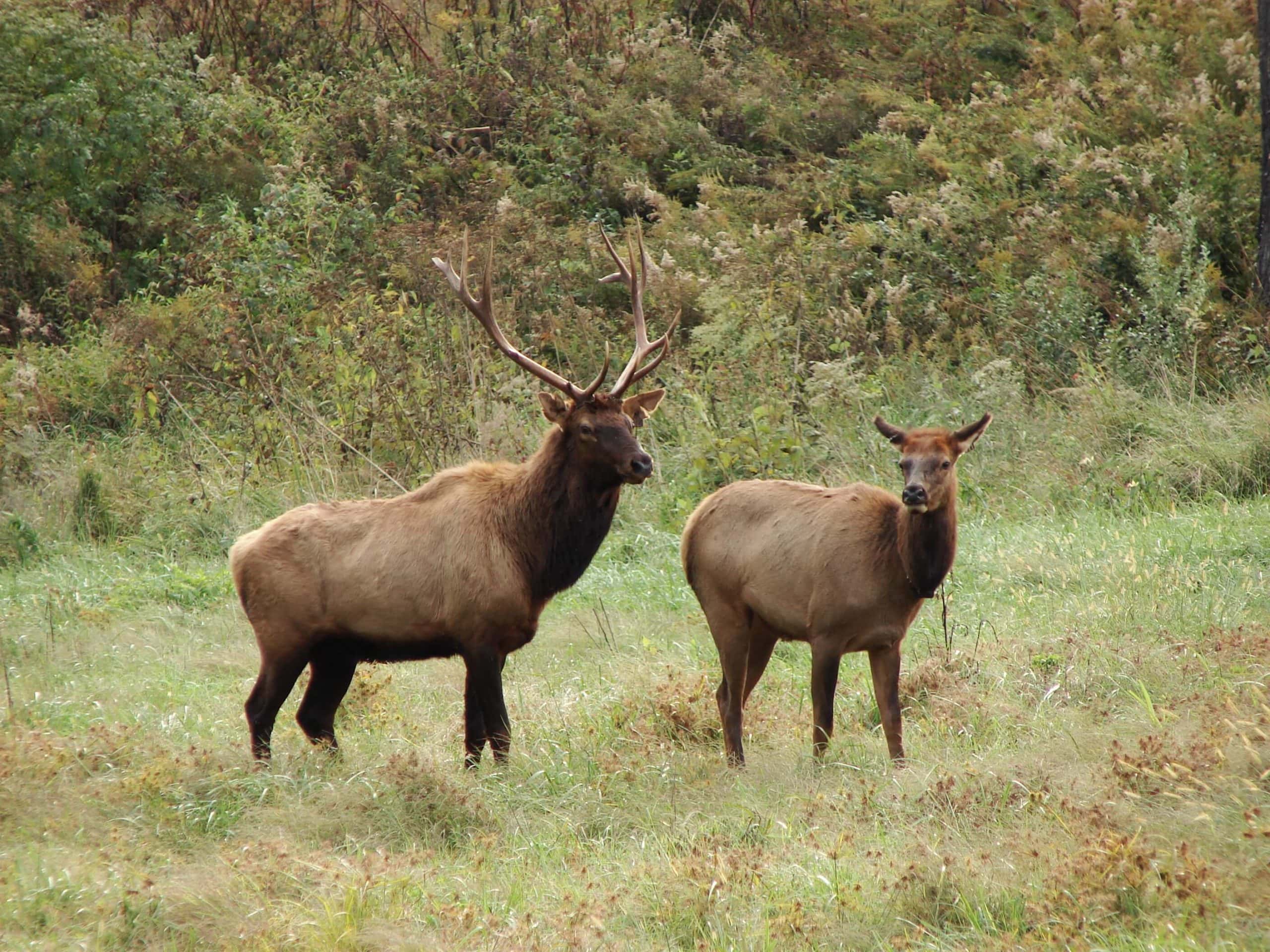
If you have been looking at land in eastern Kentucky, you have probably seen listings note that a tract sits inside the state’s elk zone. That phrase means something specific, and it matters for more than hunting. Kentucky’s elk restoration zone covers 16 counties and roughly 4.1 million acres in the southeastern mountains, and it is home to the largest free-roaming elk herd east of the Mississippi River. For a land buyer, that geography carries real weight. It shapes what the ground is worth, what you can do with it, and, in some cases, whether owning it can put an actual elk tag in your hands without ever winning the public lottery.
This guide explains what the elk zone is, what land inside it tends to be worth, how the state’s landowner permit programs work, and what to check before you buy.
What Is Kentucky’s Elk Zone?
Kentucky’s elk zone, officially the elk restoration zone, includes 16 counties in the southeastern part of the state: Bell, Breathitt, Clay, Floyd, Harlan, Johnson, Knott, Knox, Leslie, Letcher, Magoffin, Martin, McCreary, Perry, Pike, and Whitley. Inside this boundary, only a hunter drawn for a quota hunt may take elk. Outside it, a legal deer hunter can take an elk with a separate out-of-zone permit.
The elk herd itself did not exist in Kentucky until recently. Between December 1997 and March 2002, the state carried out a large-scale elk restoration effort, translocating 1,543 wild elk captured across six states (Utah, Kansas, Oregon, North Dakota, Arizona, and New Mexico), with the majority captured in Utah, and release sites concentrated in Harlan, Knott, Leslie, Letcher, Martin, Perry, and Pike counties. That restoration is why the zone is drawn where it is today, and why those release counties tend to carry the deepest hunting reputation within the broader zone.
Why This Ground Draws Buyers
Kentucky’s Elk Herd, By the Numbers
The restoration program worked better than expected. KDFWR’s most recent elk report puts the current population at over 10,000 animals, making it the largest free-ranging elk herd east of the Mississippi River. For a buyer weighing recreational value, that herd size is a documented wildlife management result rather than a listing selling point, which is why land in these 16 counties gets described the way it does.
What Elk Zone Land Is Worth
Statewide, Kentucky farm real estate averaged $5,600 an acre in 2026, according to USDA’s National Agricultural Statistics Service, up from $5,480 the year before. Cropland statewide reached $6,630 an acre, and pasture reached $4,050. Those statewide averages, though, lean heavily on Bluegrass pasture and cropland around Lexington and Louisville, ground that looks nothing like the steep, timbered terrain that makes up the elk zone.
A more honest benchmark comes from the University of Kentucky’s regional land value survey, which breaks the state into eight subregions. The elk zone straddles the survey’s two easternmost subregions, South East and North East, where the most recent 2025 figures put woodland at $1,600 to $1,700 an acre, pasture at $2,400 in both, and cropland at $3,100 to $3,600, well below the statewide average and a more honest starting point for pricing ground in this part of the state. If you are pricing a tract in the elk zone, that eastern range is the more useful benchmark than the statewide farm average. Browse current Kentucky land for sale to see how current listings in the region are priced against that range.
The Landowner-Cooperator and Voucher-Cooperator Programs
This part of elk zone land ownership gets the least attention, but it is worth understanding before you buy.
Landowner-Cooperator Permits (Large Tracts)
Under Kentucky’s landowner-cooperator program, a landowner who enrolls property in a public hunting access agreement with KDFWR receives one either-sex elk permit for every 5,000 acres enrolled, issued annually. The permit is transferable, so a landowner can keep it, give it away, or sell it. For the 2025–2026 season, 209,676 acres were enrolled statewide, and 33 landowner permits were issued as a result. One rule worth knowing before you enroll: as of the 2025–2026 season, a landowner-cooperator permit can only be used on the property actually enrolled in the access agreement, not anywhere else in the zone.
Voucher-Cooperator Permits (Smaller Tracts)
Most buyers are not looking at 5,000-acre tracts, and Kentucky’s second program is built for that reality. A landowner with at least 100 acres can enroll in the voucher-cooperator program and accumulate points from elk legally harvested on their enrolled property:
- One point for each elk harvested, regardless of sex
- Ten accumulated points earn one fully transferable, either-sex elk permit
Compared to the landowner-cooperator program’s 5,000-acre threshold, this program is accessible to a much broader range of buyers. However, it is worth going in with clear eyes: the same 2025–2026 report that documents the program also states plainly that it resulted in no permits being transferred to landowners this past season. The mechanism is real, and the math is accurate. Uptake varies year to year, so consider it a long-term possibility rather than a guaranteed annual payoff.
How Elk Hunting Permits Work Inside the Zone
Outside of cooperator programs, elk hunting inside the zone runs through a quota-hunt drawing. Kentucky’s elk hunting regulations establish three general permit categories: either-sex archery or crossbow, bull firearm, and antlerless firearm, commonly called cow firearm. Applications open August 1 and run through April 30 each year, and permits are awarded by a computer-randomized drawing rather than a preference-point system, so every applicant has a genuine shot regardless of how many years they have applied.
For the 2025–2026 season, resident odds ran roughly 1-in-159 for bull firearm and 1-in-89 for antlerless firearm (listed as “cow firearm” in KDFWR’s own odds table), a useful snapshot of just how competitive the draw is even without preference points. A person hunting outside the 16-county zone needs a separate out-of-zone elk permit and follows Kentucky’s deer season methods and dates instead, though the same elk equipment and ammunition requirements apply either way. If you compare a tract just inside the zone to one just outside, this distinction matters, as the permit path changes with the property line.
Buying Land in the Elk Zone: What to Check Before You Close
Elk zone tracts share the same regional realities as the rest of eastern Kentucky’s mountain country, and a few deserve a close look before you make an offer.
On terrain, much of this ground is steep, with limited road frontage and access that can depend on easements across neighboring property, so confirm deeded legal access before committing to a tract, not after. On mineral rights, coal and gas interests in the eastern counties are frequently severed from the surface, which means a company may hold rights beneath land you would otherwise own outright, and a full title search is the only way to know exactly what conveys. The Daniel Boone National Forest spans 21 counties and over 708,000 acres of national forest land in the region, so a tract on that boundary effectively extends your usable ground beyond the deed line. Our Appalachian Mountains land listings include a number of tracts positioned this way, and our Kentucky hunting land and Kentucky recreational land listings are a good place to see what is currently available inside and near the zone.
Sources
- Kentucky Department of Fish and Wildlife Resources, Elk Hunting Regulations
- Kentucky Department of Fish and Wildlife Resources, 2025–2026 Elk Report
- 301 KAR 2:132, Kentucky Administrative Regulations, Legislative Research Commission
- USDA National Agricultural Statistics Service, Land Values 2026 Summary
- University of Kentucky Cooperative Extension, AEC-102, Kentucky ANR Agent Land Value and Cash Rent Survey
- U.S. Forest Service, Daniel Boone National Forest
Kentucky’s elk zone is one of the few places in the eastern United States where buying the right piece of ground can genuinely change your access to a species most hunters never pursue outside the West. Whether it’s a large tract with landowner-cooperator potential or a smaller property that qualifies for the voucher-cooperator program, the fundamentals apply: know the terrain, confirm access, and check what’s under the surface before buying what’s on top. Mossy Oak Properties works with land specialists across more than 30 states, including agents on the ground in eastern Kentucky who know these counties directly. If you are ready to look at what is available inside the zone, browse the current Kentucky land listings or connect with a Mossy Oak Properties agent in Kentucky who can walk a specific tract with you.