
Virginia Hunting Seasons: Complete Guide
Virginia offers some of the best hunting in the country, from mountain ridges to coastal marshes. During recent hunting seasons, hunters reported harvesting over 200,000 white-tailed deer, thousands of black bears, and wild turkeys, showing healthy wildlife populations across the state. The Virginia Department of Wildlife Resources carefully manages these seasons to strike a balance between conservation and outdoor recreation.
Virginia offers a variety of hunting opportunities, with specific seasons for big game (deer, bear, and turkey), small game (squirrel, rabbit, and quail), furbearers (fox, coyote, and raccoon), and a range of migratory birds and waterfowl. From the Blue Ridge Mountains to the Chesapeake Bay, hunters find diverse terrain and abundant wildlife throughout the Commonwealth.
Where You Can Hunt in Virginia
The Virginia Department of Wildlife Resources maintains 47 WMAs totaling nearly 225,000 acres for the benefit of all citizens for a variety of outdoor recreational opportunities. The state provides multiple options for hunters looking for public and private land access.
- Public Lands. Virginia offers numerous public hunting opportunities, including Wildlife Management Areas, National Forests, State Forests, and other public lands. The George Washington and Jefferson National Forests span large portions of the state and remain open for public hunting.
- Private Lands. Hunters need written permission from landowners before hunting on private property. Many landowners participate in programs that provide public access to private lands.
- Urban Archery Zones. Some cities and towns offer special archery-only areas to help manage deer populations near populated areas.
Big Game Hunting in Virginia
White-tailed Deer
Virginia deer seasons are split into distinct segments based on hunting method, with archery starting earliest in early October. The early archery season typically begins in early October, giving bow hunters the first chance at deer before they become pressured by other seasons.
Virginia’s “Earn a Buck” program applies in many counties, requiring hunters to harvest an antlerless deer before taking a second or third antlered deer. This management strategy helps balance deer herds across the state. All harvested deer must be tagged immediately and reported through the electronic system before midnight the day after harvest.
Black Bear
Bear hunting in Virginia requires a separate bear license in addition to your basic hunting license. Bears now live in almost every Virginia county, with the highest populations in mountainous and forested areas. Recent bear harvests have shown slight year-to-year variations based on weather conditions and food availability during hunting seasons.
Hunters can pursue bears during archery, muzzleloader, and firearms seasons. All bears must be reported, and some require tooth samples for biological data collection. Each license permits taking only one bear per year, the bear should weigh at least 100 lbs if alive and 75 lbs if dressed.
Wild Turkey
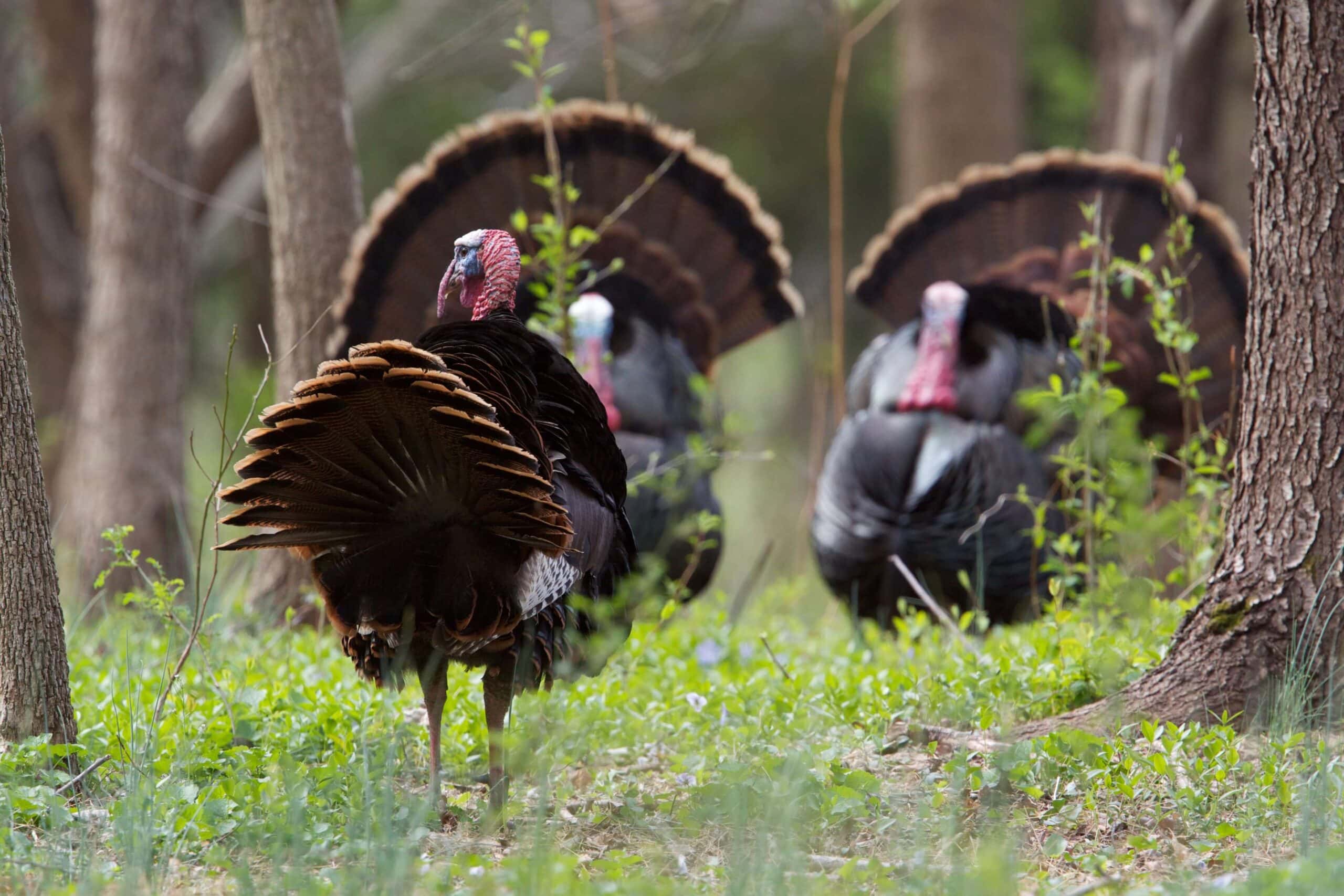
Turkey hunting provides both spring and fall opportunities. Spring season limits are restricted to bearded birds only, with a bag limit of one per day and a maximum of three per license year. Fall hunters can take birds of either sex with different bag limits.
Archery seasons typically run from early October through mid-November (Statewide), allowing bow hunters extended time in the field. Turkey populations remain stable across Virginia with consistent harvest numbers year to year.
Small Game in Virginia
- Squirrels. Found statewide in wooded areas and forests. Six per day bag limit with seasons running from early fall through winter.
- Rabbits. Hunted in brushy fields and farmland areas. The DWR continues monitoring for rabbit hemorrhagic disease virus, but no cases have been detected in eastern states.
- Quail. Quail is closed on all public lands west of the Blue Ridge Mountains, but hunting remains available in select eastern areas.
- Grouse. Found mostly in mountain regions with lower population numbers. October 25 through February 14: west of I-95. Continuous closed season: east of I-95.\
Waterfowl and Migratory Bird Hunting
Ducks and Geese
Waterfowl hunting in Virginia follows both state and federal regulations, with bag limits set at six ducks per day with specific restrictions on certain species, including mallards, wood ducks, black ducks, and scaup. Canada goose seasons are split into different zones across the state with varying dates and limits depending on population management needs. Hunters must use non-toxic shot for all waterfowl hunting and follow specific zone regulations that can change based on migration patterns and bird populations.
Doves
Dove hunting remains one of the most popular early-season opportunities in Virginia, with seasons typically including multiple segments throughout the fall and winter. The early season runs from September through October, followed by a second segment in late November through early December, and a third segment from mid-December through January. These multiple hunting periods provide extended opportunities for dove hunting across the state, with many hunters enjoying fast-paced action in managed dove fields and agricultural areas.
Woodcock
Woodcock hunting targets these migratory birds during their fall migration through Virginia’s forested wetland areas. These secretive birds prefer thick cover near water sources and provide challenging hunting opportunities for those willing to work dense habitat. Woodcock require the same licensing requirements as other migratory species, including HIP registration and adherence to federal bag limits and season dates.
Furbearers and Night Hunting
Coyote
Coyote hunting in Virginia operates under a continuous open season, allowing year-round hunting in most areas with some restrictions on public lands. These adaptable predators have expanded their range throughout the state and provide hunters with opportunities during both day and night hours. Some counties permit night hunting with specific equipment restrictions, making coyotes one of the most accessible hunting opportunities for Virginia hunters.
Bobcat
Bobcat hunting requires special tags and mandatory reporting, with seasons typically running from early October through late February. Archery seasons usually open first in October, followed by firearms seasons from November through February. Most bobcats live in mountainous regions of the state where they find suitable rocky terrain and adequate prey populations.
Fox
Fox hunting in Virginia targets both red and gray fox species, each with slightly different season dates. Red fox seasons typically run from November through February, while gray fox seasons start in January and run through February. Some areas allow night hunting with specific restrictions, and foxes provide excellent opportunities for hunters using calls and spot-and-stalk methods.
Legal Hunting Methods and Equipment
Virginia allows multiple hunting methods depending on the season and species being hunted. Understanding equipment regulations helps hunters stay legal and safe in the field.
- Archery and Crossbows. Allowed during specific seasons and designated areas, providing extended hunting opportunities with quieter equipment.
- Muzzleloaders. Single-shot firearms with limited range that have their own designated seasons for big game hunting.
- Rifles and Shotguns. Used for big game and small game hunting, depending on local regulations and discharge ordinances.
- Dogs. Permitted for hunting certain species like deer, bear, turkey, and small game, but rules vary by county and species.
- Blaze Orange or Pink. Required during firearm seasons with at least 100 square inches visible from 360 degrees for safety.
- Baiting Restrictions. Baiting deer is prohibited from September through early January statewide and during any open deer or elk season.
Licenses, Tags, and Basic Rules
| License Type | Resident Fee | Non-Resident Fee | What It Covers |
| Annual Hunting | $18.00 | $111.00 | Basic hunting license |
| Deer/Turkey | $23.00 | $151.00 | Required for deer and turkey |
| Bear License | $21.00 | $151.00 | Required for bear hunting |
| Archery | $18.00 | $31.00 | Additional for bow hunting |
| Muzzleloader | $18.00 | $31.00 | Additional for muzzleloader |
| Sportsman’s License | $100.00 | N/A | Package deal including hunting, bear, deer/turkey, archery, muzzleloading, freshwater fishing, and trout |
| Apprentice | $11.00 | $21.00 | Two-year license for beginners |
| Youth Combination (12-15) | $16.00 | $31.00 | Includes hunting, bear, deer/turkey, archery, and muzzleloading |
Hunter education courses are required for most first-time hunters, particularly those aged 12-15. The apprentice hunting license provides a two-year option for beginners to hunt under supervision while completing education requirements. All big game harvests must be reported through the electronic system and tagged immediately before being moved from the kill site, with tags remaining attached until the game is processed for consumption.
How Mossy Oak Properties Can Help
While Virginia offers excellent public hunting on Wildlife Management Areas and National Forests, many hunters prefer the control and consistency that comes with owning their property. Virginia hunting land for sale through Mossy Oak Properties includes detailed property assessments covering wildlife populations, timber quality, water sources, and access points. Our agents work with hunters to find tracts that match specific needs, from weekend archery retreats to larger properties suitable for multiple hunting methods.
Mossy Oak Properties specializes in connecting hunters with rural and recreational properties across Virginia. Many working farms provide excellent hunting opportunities while generating agricultural income, combining productive cropland with quality deer and turkey habitat. Private ownership gives hunters the ability to implement management practices, control hunting pressure, and create long-term hunting traditions for their families.