
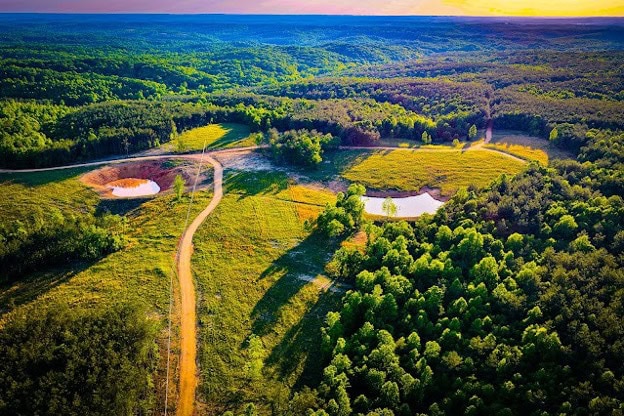
The first question I ask every buyer who comes to me isn’t about acreage or price per acre. It’s simpler than that.
What do you want this land to do for you?
That question changes everything. It determines which region deserves your attention, which features matter most, which due diligence items are non-negotiable, and whether a given tract is actually right for you, or just looks good on paper.
Texas offers over 268,000 square miles of possibility. Timber country in the East. Live oak and limestone in the Hill Country. River breaks rolling through the South. Rolling ranch land stretching toward the Panhandle. Each region has its own character, its own market, and its own set of considerations. Buying rural land in Texas is not a transaction you can reduce to a checklist. But there are fundamentals every buyer needs to understand before they ever make an offer.
This is the post I wish every buyer had read before picking up the phone.
1. Start With Purpose, Not Price
Land without purpose is just acreage. And acreage without direction leads to expensive regret.
Before you do anything else, get honest about why you’re buying. Is this a hunting retreat? A working cattle operation? A generational legacy for your family? A long-term investment you plan to hold and eventually sell? A homestead you’ll build and live on full-time?
Each answer points to a different property profile. A recreational buyer wants cover, water, and wildlife. An agricultural operator wants soil quality, fencing, and water infrastructure. An investor wants liquidity, appreciation trends, and exit flexibility. A homesteader wants a buildable site, utilities, and access.
You can want more than one of these things. Most buyers do. But you need to rank them. When you find a property that checks eight of ten boxes, you need to know which two you’re willing to leave on the table.
Purpose-first thinking protects you from buying the wrong land in the right county, or worse, the right land in the wrong county.
2. Understand Texas Water: All of It
Water is the most important and most misunderstood asset in rural Texas real estate. And when I say water, I mean all of it: surface water, groundwater, and water rights.
Surface water includes ponds, tanks, lakes, rivers, creeks, and seasonal drainages on the property. In Texas, surface water is generally governed by the “prior appropriation” doctrine. In practical terms, that means water flowing in a creek or river may not belong to you just because it crosses your land. Know what you’re getting.
Groundwater in Texas is governed differently. Under the “rule of capture,” landowners generally have the right to pump groundwater beneath their property. But groundwater conservation districts are active across the state and increasingly regulate usage, especially in regions under stress. Know which district governs your tract and what limitations or permits apply.
Ponds and stock tanks are often what buyers see and fall in love with. What they don’t always ask: Is the tank fed by runoff or a spring? When did it last hold water through a dry summer? What’s the water table look like for a water well, and what’s the typical depth and output?
Reliable water supports livestock, wildlife, irrigation, and long-term value. Unreliable water can turn a dream property into an expensive management problem.
Evaluate water early. Evaluate it hard.
3. Access Matters More Than You Think
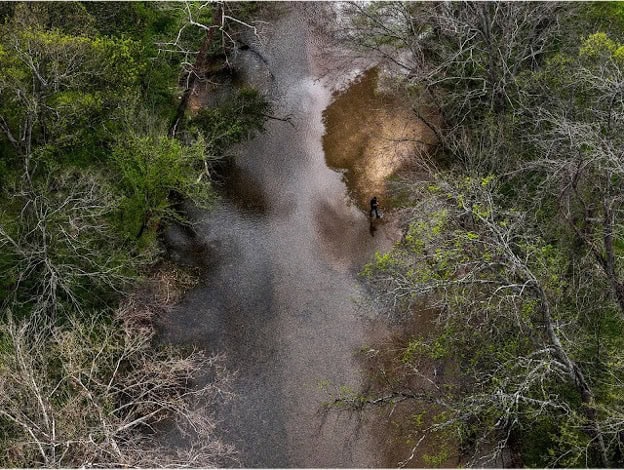
If you can’t get to it legally and reliably, it’s not worth much.
Legal access in Texas rural real estate is not always as obvious as a paved county road at the front gate. Many rural tracts are served by easements that cross neighboring properties, and those easements vary significantly in scope, maintenance responsibility, and enforceability.
Before you close on any property, confirm:
- Is access via a public road, a recorded easement, or an informal understanding between neighbors?
- What does the easement specifically allow: foot traffic only? Agricultural equipment? Vehicles?
- Is the easement recorded in the county deed records?
- Who is responsible for maintenance?
- Are there locked gates, shared road agreements, or other practical complications?
An informal handshake agreement with the current neighbor means nothing when that neighbor sells. Buried in the deed records of many Texas counties are properties with access disputes that have outlasted the original parties to the handshake. Verify access before you fall in love with the land behind the gate.
4. Know the Difference Between Surface and Mineral Rights
Texas land is often sold without the mineral estate. That means the oil, gas, and other minerals beneath your property may belong to someone else, sometimes many someone elses, across a fractured ownership history that spans generations.
This matters for two reasons.
First, a third party who owns the minerals may have the legal right to access your surface to develop them. Texas law generally protects surface owners through the “accommodation doctrine,” but the burden is real, and so is the disruption. Pipeline easements, well pads, caliche roads, and production equipment are not abstractions. They show up on the ground.
Second, mineral rights carry long-term value. If you have an opportunity to acquire full or partial mineral ownership, understand what that means for the tract’s future income potential and overall asset value.
Ask your broker what minerals convey. Get a title company to run a mineral search. And understand what a retained mineral interest or an active lease means before you sign a contract.
5. Agricultural Exemptions Are Real, and Fragile
Property taxes in Texas are among the highest in the nation on a rate basis. What keeps rural land ownership affordable is the agricultural exemption, which values land based on its productive agricultural value rather than its market value.
For many rural tracts, this difference is dramatic. Land that would carry a six-figure annual tax bill at market value may be taxed at a fraction of that under an ag exemption.
But the exemption isn’t automatic. It requires active agricultural use: cattle grazing, hay production, wildlife management, timber, beekeeping, or other qualifying activities. And it must be applied for and maintained. If a tract loses its ag exemption, rollback taxes can apply for up to five years of back taxes, plus interest.
Before you buy, confirm:
- Does the property currently carry an agricultural exemption?
- Is the use that qualifies it something you can realistically maintain?
- If it doesn’t have an exemption, how long does it take to qualify, and what does that tax exposure look like in the interim?
An ag exemption is one of the most valuable assets attached to a rural Texas property. Protect it accordingly.
6. Floodplain Isn’t a Four-Letter Word
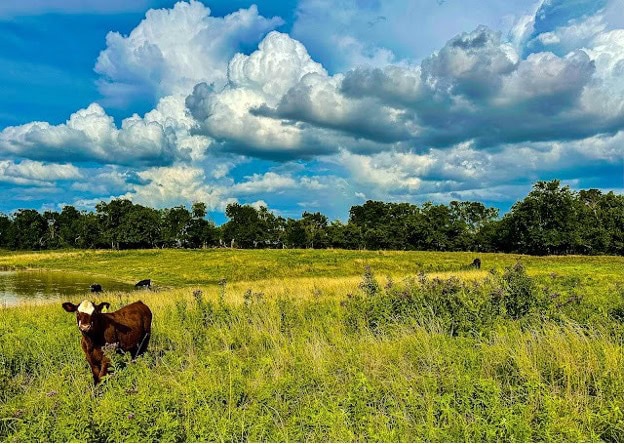
One of the most common mistakes I see first-time rural buyers make is dismissing a property the moment they hear “floodplain.” I understand the instinct, but it’s worth pausing before you move on.
Floodplain and wetland areas are often the most ecologically productive acres on a property. Creek bottoms hold the best soils. Hardwood corridors concentrate wildlife movement. Seasonal wetlands support
waterfowl and ground-nesting birds. Riparian corridors create the edge habitat that whitetail rely on for bedding and travel.
For recreational buyers, floodplain is frequently the backbone of what makes a property hunt well. For agricultural operations, bottomland soils often outperform upland ground in forage production and moisture retention through dry stretches.
That said, floodplain does introduce regulatory considerations: building setbacks, permitting requirements, and potential lender restrictions.
These are real. They deserve evaluation. But they are parameters to be understood and planned around, not automatic disqualifiers.
Ask what percentage of the property lies in a mapped floodplain. Ask how the floodplain functions on the ground. Then evaluate it as a feature, not a liability.
7. Match the Region to Your Goals
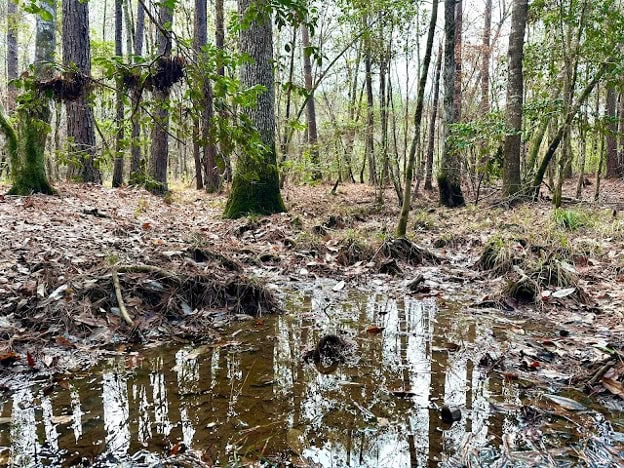
Texas is not one market. It is dozens of distinct micro-markets shaped by different ecoregions, buyer pools, and land uses. Matching your goals to the right region is as important as evaluating any individual property.
The Cross Timbers near DFW balances hunting, cattle, and proximity to the metroplex. The Blackland Prairie offers fertile soils, strong water, and development-corridor positioning. The Piney Woods of Deep East Texas are timber and recreation country, with high rainfall and strong isolation. The Hill Country commands premium prices for a reason:
water, wildlife, and views that have no substitute. But it’s a different ownership experience than the South Texas brush country, which delivers perhaps the most consistent trophy whitetail hunting in North America.
Knowing which region fits your purpose and your budget saves you from chasing beautiful land in the wrong context. A Hill Country ranch and a South Texas sendero are both world-class in their own right. They serve completely different buyers.
8. Think About How It Ends Before It Begins
The best land buyers I know have one thing in common: they think about the exit before they ever sign a contract.
That doesn’t mean they’re not committed. It means they’re smart. It means they understand that land is a long-term asset, and that the decisions you make at acquisition, about access, infrastructure, subdivision potential, and deed restrictions, shape your options for decades.
Properties with flexible configurations, clean legal access, reliable water, and multiple build sites will command stronger demand when it’s time to transition. Properties that fit only one narrow buyer profile carry real resale risk.
Ask yourself: If I needed to sell this in five years, who would buy it, and what would it take to be positioned well? If that question is hard to answer, pay attention to why.
Buying with the end in mind isn’t pessimism. It’s stewardship.
9. Find an Advisor Who Knows the Land, Not Just the Listing
Rural land transactions are different from residential real estate in almost every meaningful way. Mineral rights, water rights, agricultural exemptions, timber management, conservation programs, wildlife management plans, access easements, governmental regulations, and regional market dynamics are all live issues that a residential agent has no training to navigate.
Work with someone who understands the land itself: its ecology, its productivity, its management history, and its place in the regional market. Someone who can evaluate the soil alongside the survey, the water alongside the wildlife, the income potential alongside the asking price.
The right advisor doesn’t just find you a property. They help you figure out which one is actually right for you, and which ones aren’t.
Buying rural land in Texas is one of the most significant decisions a person can make. Get it right, and you’ve added something lasting to your life: a place that produces, provides, and endures. Get it wrong, and you’ve bought someone else’s problem at full price.
Take your time. Ask hard questions. And start with purpose.
Call to Action
If you’re thinking about buying, selling, or stewarding Texas land with an eye toward both present value and long-term legacy, we would welcome the opportunity to visit with you.
At Mossy Oak Properties – Texas Land Advisors, we work with landowners and buyers to evaluate market value, identify management and income opportunities, and position land in a way that honors both conservation and return. We help our clients make clear, informed decisions, long before and long after the transaction.
Call or text: Cade Baxter, Broker/Partner – 214.236.4205
Email: cbaxter@mossyoakproperties.com
Whether you’re curious about what your land is worth, exploring a potential sale or acquisition, or simply seeking guidance, we’re here to help you protect what matters and move forward with confidence.
Not just a land brokerage, but trusted advisors.
Follow us on Instagram @mop_txlandadvisors, on Facebook Mossy Oak , Properties Texas Land Advisors on TikTok @mop_txlandadvisors, on YouTube @TexasLandAdvisors or X @TXLandAdvisors
To join our newsletter for property updates, reach out to Cade Baxter at cbaxter@mossyoakproperties.com.
For our full catalog of listings: https://www.mossyoakproperties.com/office/mossy-oak-properties-texas-land-advisors/